






 Home
Home
 Products
Thyroid Function
Total Thyroxine (T4)
Products
Thyroid Function
Total Thyroxine (T4)
Total Thyroxine (T4)

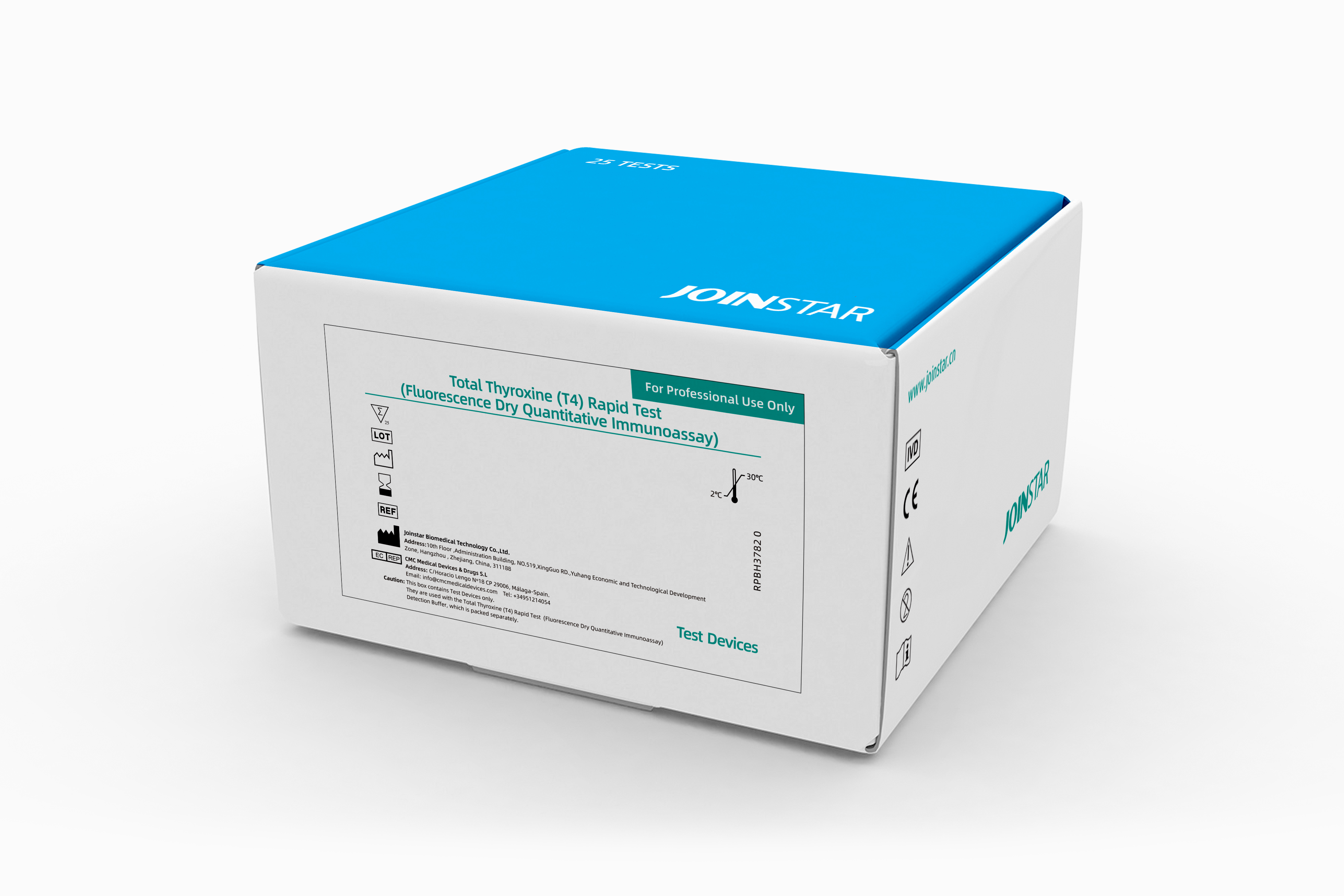
| Kit Name | Total Thyroxine (T4) Rapid Test |
| Method | Fluorescence Dry Quantitative Immunoassay |
| Assay Measuring Range | 0.5 μg/dL ~ 30.0 μg/dL |
| Incubation Time | 15 min |
| Sample Type | Human serum, Plasma (EDTA), Whole Blood (EDTA) |
| Reference Range | 5.0 μg/dL ~ 11.39 μg/dL |
| Storage and Stability | 18 months 2℃~30℃ |
Order Information
| Catalog No. | Product | Test/Kit |
| FCTT4E01 |
Total Thyroxine (T4) Rapid Test |
25 |

Introduction
Total Thyroxine (TT4) is the predominant circulating hormone synthesized and secreted by the thyroid gland. It serves as a vital prohormone and a key regulator of the body's basal metabolic rate, influencing cardiovascular health, muscular function, and overall growth and development. The "total" measurement includes both the metabolically active free T4 and the larger reservoir of T4 bound to carrier proteins in the blood.
Clinical Applications


Comprehensive Thyroid Screening
Serves as a primary and indispensable biomarker to evaluate thyroid function and screen for thyroid disease, effectively identifying classical hyperthyroidism and primary or secondary hypothyroidism.
Therapeutic Efficacy Monitoring
Provides objective, quantitative data crucial for monitoring patients undergoing thyroid hormone replacement therapy (e.g., levothyroxine) or taking anti-thyroid medications, ensuring dosages are optimized for sustained endocrine balance.
Evaluation of Protein-Binding Abnormalities
Since TT4 measures protein-bound thyroxine, it is particularly useful when assessed alongside Free T4 (FT4) to identify clinical conditions that alter thyroxine-binding globulin (TBG) levels, such as pregnancy, hepatic disorders, or specific pharmacological treatments.
Synergistic Thyroid Profiling
To deliver maximum diagnostic confidence, TT4 is optimally utilized alongside other essential markers, including TSH, FT4, TT3, and FT3. This holistic panel approach allows clinicians to fully evaluate the hypothalamic-pituitary-thyroid (HPT) axis.