






 Home
Home
 Products
Reproductive Health
Luteinizing Hormone (LH)
Products
Reproductive Health
Luteinizing Hormone (LH)
Luteinizing Hormone (LH)
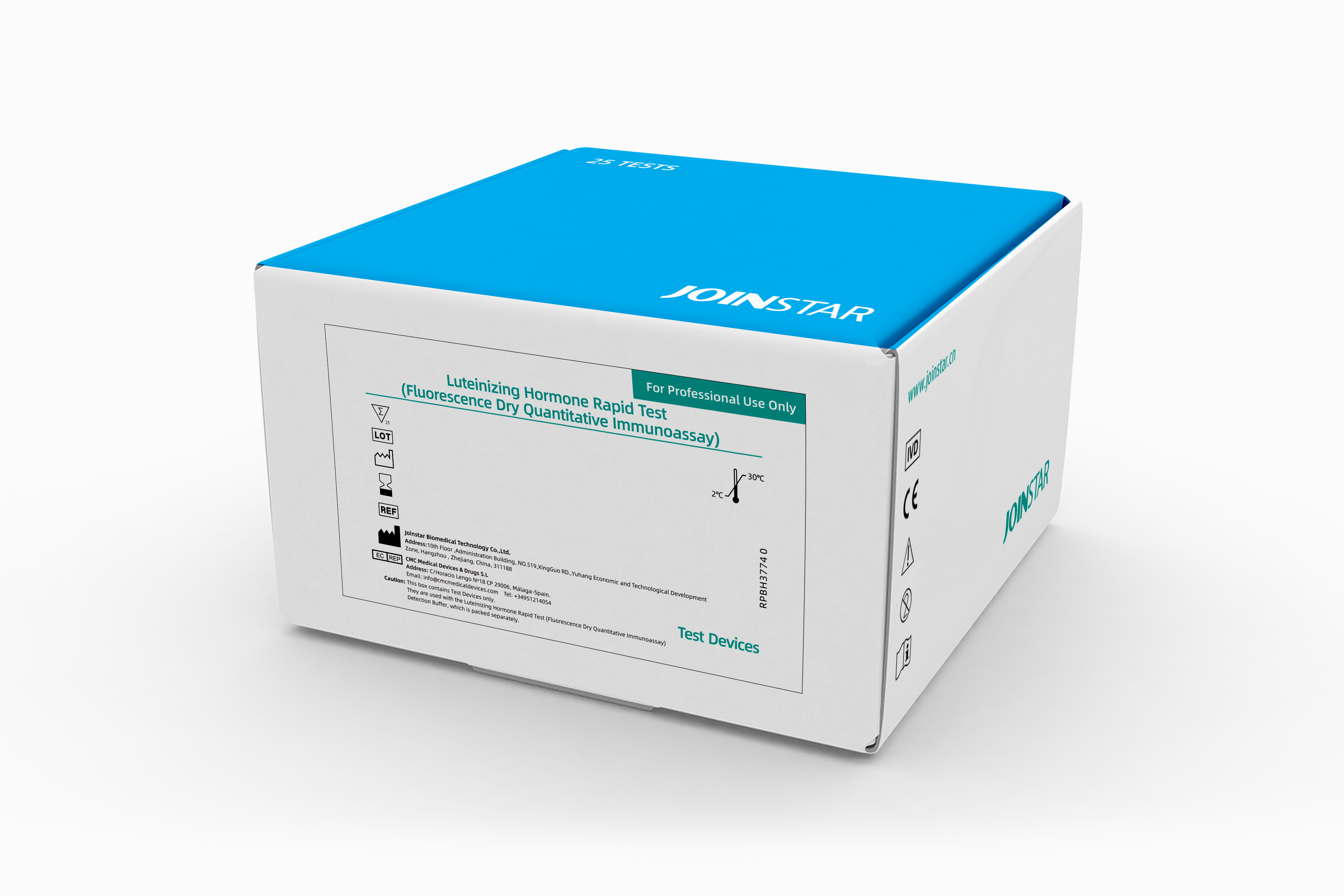
| Kit Name | Luteinizing Hormone Detection Kit |
| Method | Fluorescence dry quantitative immunoassay |
| Assay Measuring Range | |
| Incubation Time | |
| Sample Type | |
| Reference Range | |
| Storage and Stability |
Order Information
| Catalog No. | Product | Test/Kit |
| FCLHDE01 | Luteinizing Hormone Detection Kit | 25 |

Introduction
Luteinizing Hormone (LH) is a vital gonadotropin synthesized and secreted by the anterior pituitary gland, playing a central and indispensable role in regulating the reproductive systems of both men and women. In women, an acute rise in LH triggers ovulation and the development of the corpus luteum, while in men, it stimulates Leydig cells in the testes to produce testosterone.
Clinical Applications


Assessment of Gonadotropin Function
Serves as a primary and objective biomarker to assess gonadotropin function, effectively aiding in the localization of reproductive system disorders (differentiating between primary and secondary hypogonadism).
Ovulation Monitoring & Infertility Evaluation
Essential for identifying the LH surge that precedes ovulation, providing critical data for infertility investigations, assisted reproductive technology (ART) planning, and menstrual cycle disorders.
Diagnosis of Pituitary and Gonadal Disorders
Assists in the clinical evaluation of conditions such as Polycystic Ovary Syndrome (PCOS), premature ovarian failure, and various pituitary adenomas.
Comprehensive Hormone Profiling
When utilized alongside other reproductive markers such as FSH, PRL, E2, and Testo, LH provides a multidimensional diagnostic picture, allowing clinicians to evaluate the presence of disorders caused by changes in sex hormones with exceptional diagnostic confidence.