






 Home
Home
 Products
Cardiovascular Disease (CVD)
Central Nervous System -Specific Protein (S100β)
Products
Cardiovascular Disease (CVD)
Central Nervous System -Specific Protein (S100β)
Central Nervous System -Specific Protein (S100β)
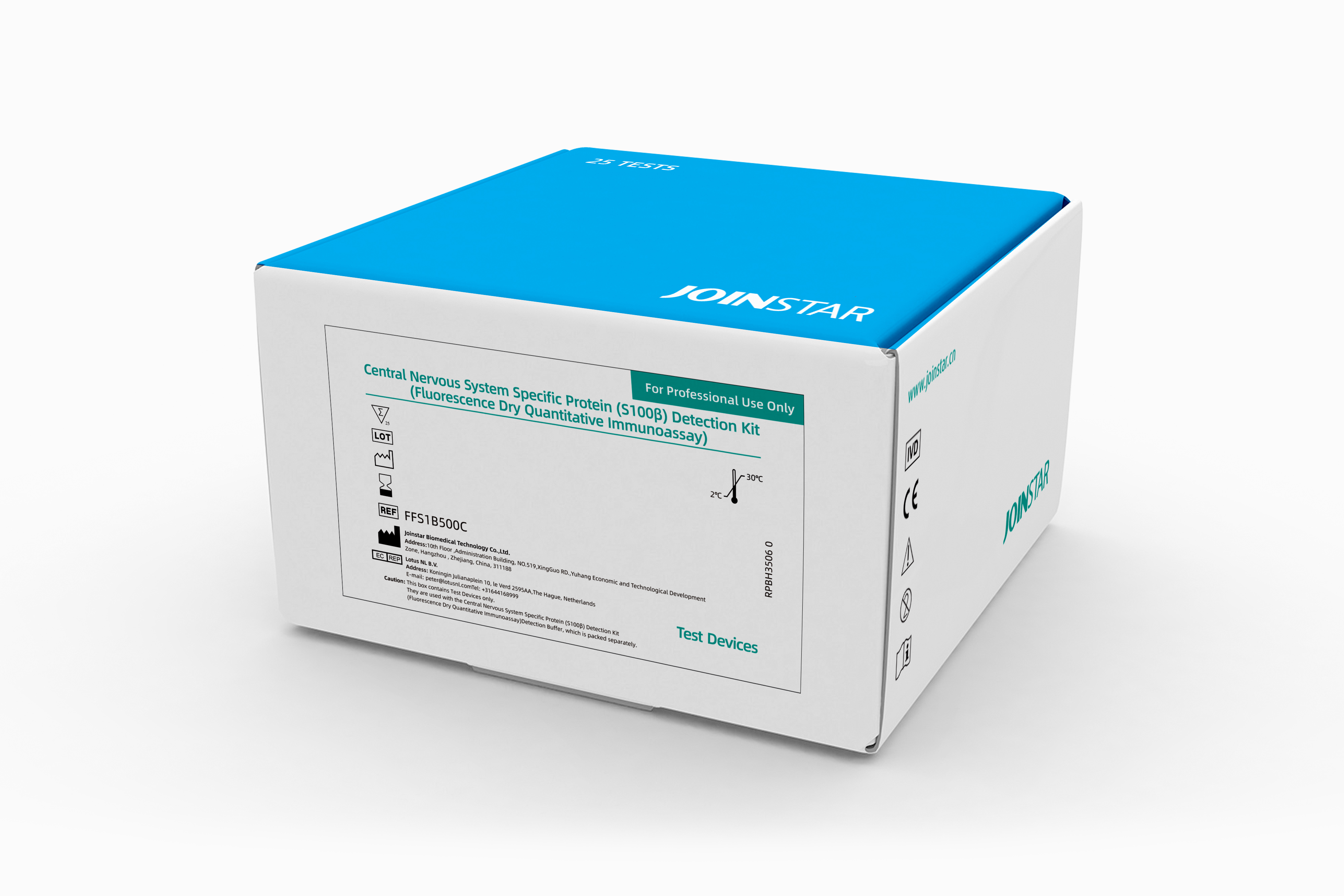
| Kit Name | Central Nervous System Specific Protein(S100β) Detection Kit |
| Method | Fluorescence dry quantitative immunoassay |
| Assay Measuring Range | 0.010 ng/mL ~ 50.000 ng/mL |
| Incubation Time | 5 min |
| Sample Type | Human serum, Plasma (EDTA) |
| Reference Range | ≤ 0.105 ng/mL |
| Storage and Stability | 18 months at 2°C–8°C. |
Order Information
| Catalog No. | Product | Test/Kit |
| FFS1B500C | Central Nervous System Specific Protein(S100β) Detection Kit | 25 |

Introduction
S100β, a central nervous system-specific protein, is a low molecular weight EF-hand calcium-binding protein with diverse biological activities. It serves as a biomarker reflecting pathophysiological processes including CNS injury, inflammation, and degenerative changes.
Clinical Applications


Acute Cerebral Infarction (CIS)
Early Diagnosis: Levels significantly elevate ~10 hours post-stroke.
Severity Assessment: Peaks at ~72 hours; correlates with infarct volume.
Treatment Monitoring: Declining levels indicate therapeutic efficacy.
Prognosis: Serum concentrations predict clinical/functional outcomes.
Traumatic Brain Injury (TBI)
Early Diagnosis: Elevates within 6 hours, indicating secondary injury.
Severity Correlation: Levels increase with injury severity.
Prognosis: Higher concentrations predict poorer outcomes.
Neonatal Hypoxic-Ischemic Encephalopathy (HIE)
Early Diagnosis: Early elevation inversely correlates with Apgar scores.
Severity Grading: Concentrations rise with HIE severity (mild→moderate→severe).
Prognosis: Predicts long-term sequelae/mortality, especially in moderate-severe cases.
Subarachnoid Hemorrhage (SAH)
Severity Assessment: Strong positive correlation with initial hemorrhage severity.
Prognosis: Higher levels indicate poorer outcomes; associates with post-SAH cerebral infarction.
Neurological Monitoring Post-Cardiopulmonary Resuscitation
Recommended in 2019 Expert Consensus on Early Neurological Prognosis Assessment for continuous monitoring:
Brain injury causes 68% of post-resuscitation deaths and long-term disability.
Serial S100β testing enables neuroprotective intervention guidance.