






 Home
Home
 Products
Reproductive Health
Progesterone(PROG)
Products
Reproductive Health
Progesterone(PROG)
Progesterone(PROG)
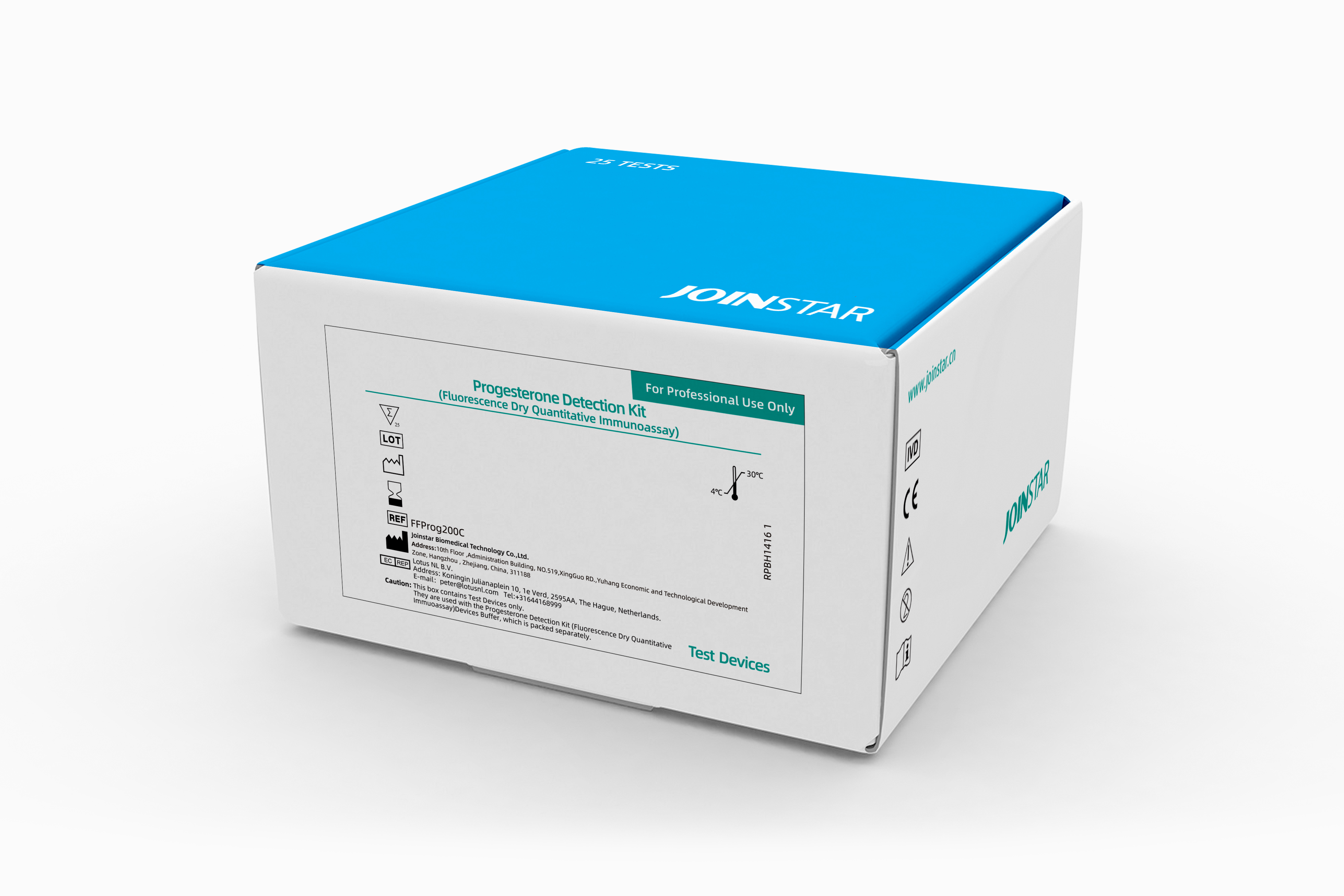
| Kit Name | Progesterone Detection Kit |
| Method | Fluorescence dry quantitative immunoassay |
| Assay Measuring Range | 0.37 ng/mL ~ 40.00 ng/mL |
| Incubation Time | 10 min |
| Sample Type | Human serum, Plasma (EDTA), Whole Blood (EDTA) |
| Reference Range |
Non-pregnant Women Follicular Phase < 0.37-1.98 (ng/mL) Luteal Phase 0.88-30.43 Postmenopausal < 0.37-0.80 Pregnant Women First Trimester 4.70 - >40.00 |
| Storage and Stability | Detection Buffer: Stable for up to 12 months (Store at 2°C–8°C in a sealed, dark environment). Reaction Plate: Stable for up to 12 months (Store sealed at 4°C–30°C). |
Order Information
| Catalog No. | Product | Test/Kit |
| FFProg200C | Progesterone Detection Kit | 25 |

Introduction
For the in vitro quantitative determination of progesterone (P) concentrations in female serum/plasma/whole blood.
In women with normal menstruation.
Progesterone is maintained at low levels during the follicular phase, with a surge in luteinising hormone production and a sharp rise in progesterone during the luteal phase following ovulation, and can therefore be used as a reliable indicator of natural or induced ovulation .
The result leads to changes in the uterus and prepares the ovary for implantation of the fertilised egg. Insufficient progesterone in the luteal phase is thought to be the cause of endometrial dysplasia if abnormally low levels of progesterone occur.
If conception does not occur, progesterone drops in the last four days of the cycle as the corpus luteum degenerates. If conception occurs, the corpus luteum maintains progesterone at mid-luteal concentrations until the sixth week of gestation. At that point, the placenta becomes the source of progesterone for as long as it takes, and progesterone levels are continuously elevated. In early pregnancy, low levels of progesterone indicate a high likelihood of preterm abortion or ectopic pregnancy .
In conclusion, progesterone testing can be used to detect ovulation in women and to assess the luteal phase, which can help in fertility determination .
Clinical Applications


Ovulation monitoring
Blood progesterone levels >5ng/ml suggest ovulation.
Evaluation of luteal function
Evaluation of luteal function: A lower than physiological blood progesterone level during the luteal phase is indicative of luteal insufficiency.
Ancillary diagnosis of ectopic pregnancy
In ectopic pregnancy, blood progesterone levels is very low, most patients < 15ng/ml.
Others
Aids in the diagnosis of pre-eclampsia, observation of placental function, prognostic assessment of in vitro fertilisation-embryo transfer, etc.