






 Home
Home
 Products
Reproductive Health
Anti-Müllerian Hormone (AMH)
Products
Reproductive Health
Anti-Müllerian Hormone (AMH)
Anti-Müllerian Hormone (AMH)
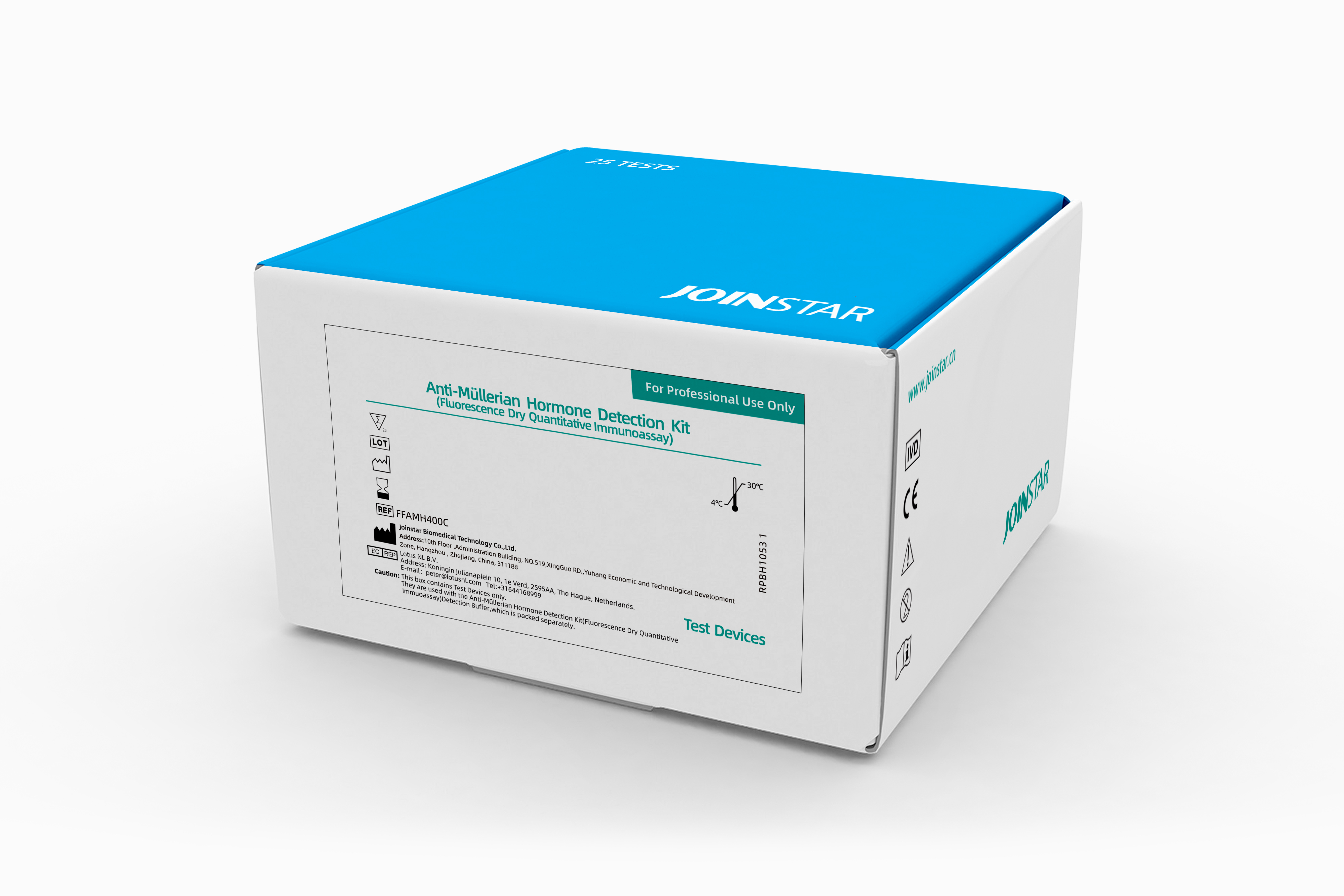
| Kit Name | Anti-Müllerian Hormone Detection kit |
| Method | Fluorescence dry quantitative immunoassay |
| Assay Measuring Range | 0.05 ng/mL ~ 25.00 ng/mL |
| Incubation Time | 15 min |
| Sample Type | Human serum, Plasma (EDTA), Whole Blood (EDTA) |
| Reference Range |
20-24 years 1.700 ng/mL - 9.500 ng/mL 25-29 years 1.150 ng/mL - 9.100 ng/mL 30-34 years 0.600 ng/mL - 7.600 ng/mL 35-39 years 0.800 ng/mL - 5.300 ng/mL 40-44 years 0.100 ng/mL - 3.000 ng/mL 45-49 years 0.060 ng/mL - 2.100 ng/mL |
| Storage and Stability | Detection Buffer: Stable for up to 12 months (Store at 4°C–30°C in a sealed, dark environment). Reaction Plate: Stable for up to 12 months (Store sealed at 4°C–30°C). |
Order Information
| Catalog No. | Product | Test/Kit |
| FFAMH400C | Anti-Müllerian Hormone Detection kit | 25 |

Introduction
Anti-Müllerian hormone (AMH) is a glycoprotein, a dimer consisting of two identical 72 kDa monomers linked by a disulfide bond. It belongs to the transforming growth factor-β family.
AMH is differentially expressed at different stages of male and female growth and development, and there are differences in its biological roles.
During embryonic development, AMH regulates the differentiation and development of the reproductive ducts and is essential for sex differentiation. After birth, AMH regulates the function of male testicular mesenchymal cells.
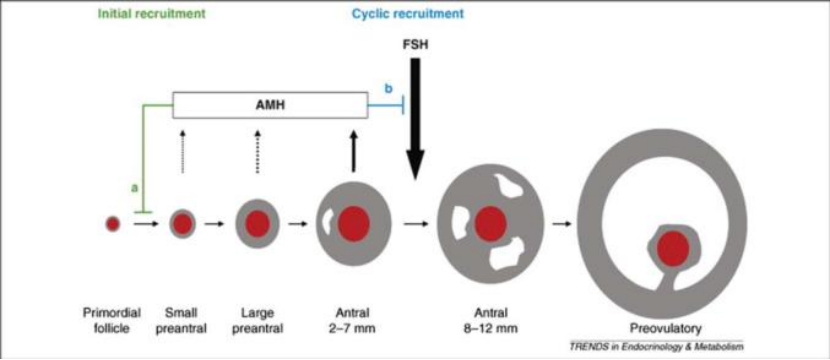
In adult females, AMH inhibits the recruitment of primordial follicles and the development of antral follicles, preventing premature follicular depletion.
AMH reflects the age-related decline in ovarian reserve earlier than follicle stimulating hormone (FSH), estradiol (E2), inhibin B (inhB) and antral follicle count (AFC), and its levels are not affected by the menstrual cycle, hormonal contraceptives, or pregnancy.


Clinical Applications


Assessment of ovarian reserve function
AMH is a sensitive and specific marker for evaluating ovarian reserve function.
Diagnosis of premature ovarian failure (POF)
The level of AMH is reduced in patients with hypoovarianism, and it is almost undetectable in patients with POF.
Diagnosis of polycystic ovary syndrome (PCOS)
The level of AMH in patients with PCOS is 2-3 times higher than normal.
Diagnosis and monitoring of ovarian granulosa cell tumour (GCT)
It is significantly elevated in patients with GCT and is used for follow-up monitoring of GCT treatment.
Prediction of ovarian responsiveness in assisted reproductive technology (ART)
It can be used to predict ovarian hypo responsiveness and ovarian hyperstimulation to develop individualised stimulation protocols for improving pregnancy rates to some extent and preventing complications.