






 Home
Home
 Products
Diabetes & Kidney injury
Microalbumin (MAU)
Products
Diabetes & Kidney injury
Microalbumin (MAU)
Microalbumin (MAU)
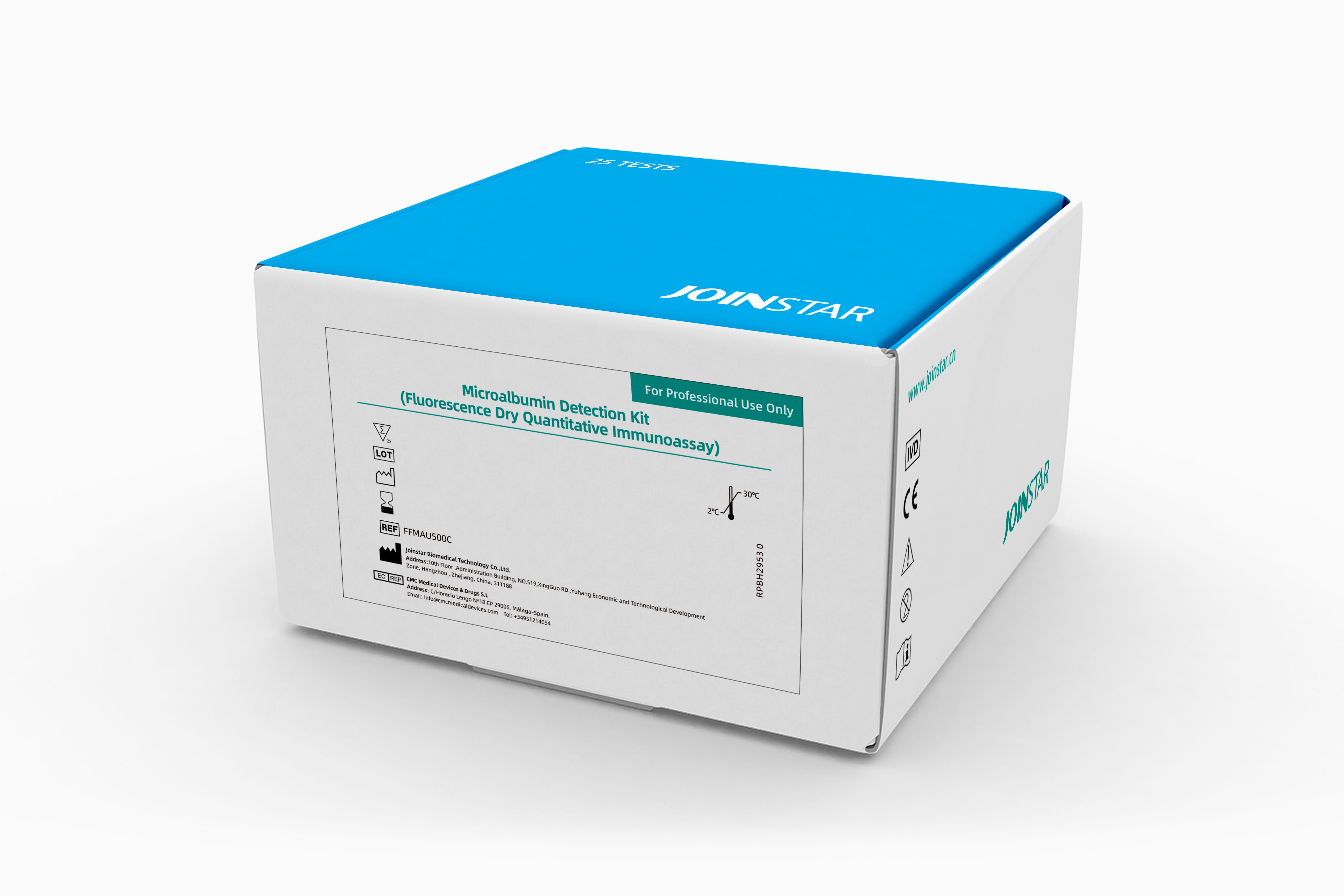
| Kit Name | Microalbumin Detection Kit |
| Method | Fluorescence dry quantitative immunoassay |
| Assay Measuring Range | 5.00 mg/L ~ 300.00 mg/L |
| Incubation Time | 10 min |
| Sample Type | Urine |
| Reference Range | < 20.00 mg/L |
| Storage and Stability |
Detection Buffer: Stable for up to 12 months (Store at 2°C–8°C in a sealed, dark environment). Reaction Plate: Stable for up to 12 months (Store sealed at 2°C–30°C). |
Order Information
| Catalog No. | Product | Test/Kit |
| FFMAU500C | Microalbumin Detection Kit | 25 |

Introduction
Albumin is a protein in the blood with a molecular weight of 69kDa and has a negative charge. Under normal physiological conditions, it barely pass through the glomerular filtration barrier.
99% of the filtered urine microalbumin (MAU) is reabsorbed by the proximal renal tubules, so only a very small amount of albumin appears in the urine.
MAU detected in urine indicates abnormal leakage of protein from the kidney, which not only reflects the damage of glomerular filtration function, but also reflects the damage of renal tubular reabsorption function.
Clinical Applications


Evaluation of early glomerular microangiopathy
MAU excretion levels of 20-200mg/L indicates that the kidney has been damaged.
When the excreted MAU levels exceed 200mg/L, hypoalbuminemia may occur with the development of irreversible nephropathy.
Predicting the risk of kidney injury in diabetic patients
The earliest clinical sign of diabetic kidney disease (DKD) is the continuous increase in urinary albumin excretion rate and the appearance of microalbuminuria.
Early diagnosis of diabetic kidney disease (DKD)
DKD is mainly characterized by microalbuminuria in the early stage. MAU is a very sensitive marker of early kidney damage and an important indicator of early kidney damage in diabetes.
Diagnosis and risk stratification of hypertensive kidney injury
Patients with hypertension with increased MAU should be treated with antihypertensive treatment to slow down the damage to the microvessels.
Risk prediction of cardiovascular disease
Elevated urinary MAU is an important risk factor for the progression of cardiovascular disease.