






 Home
Home
 Products
Infection
Interleukin 6 (IL-6)
Products
Infection
Interleukin 6 (IL-6)
Interleukin 6 (IL-6)
Key Product Characteristics
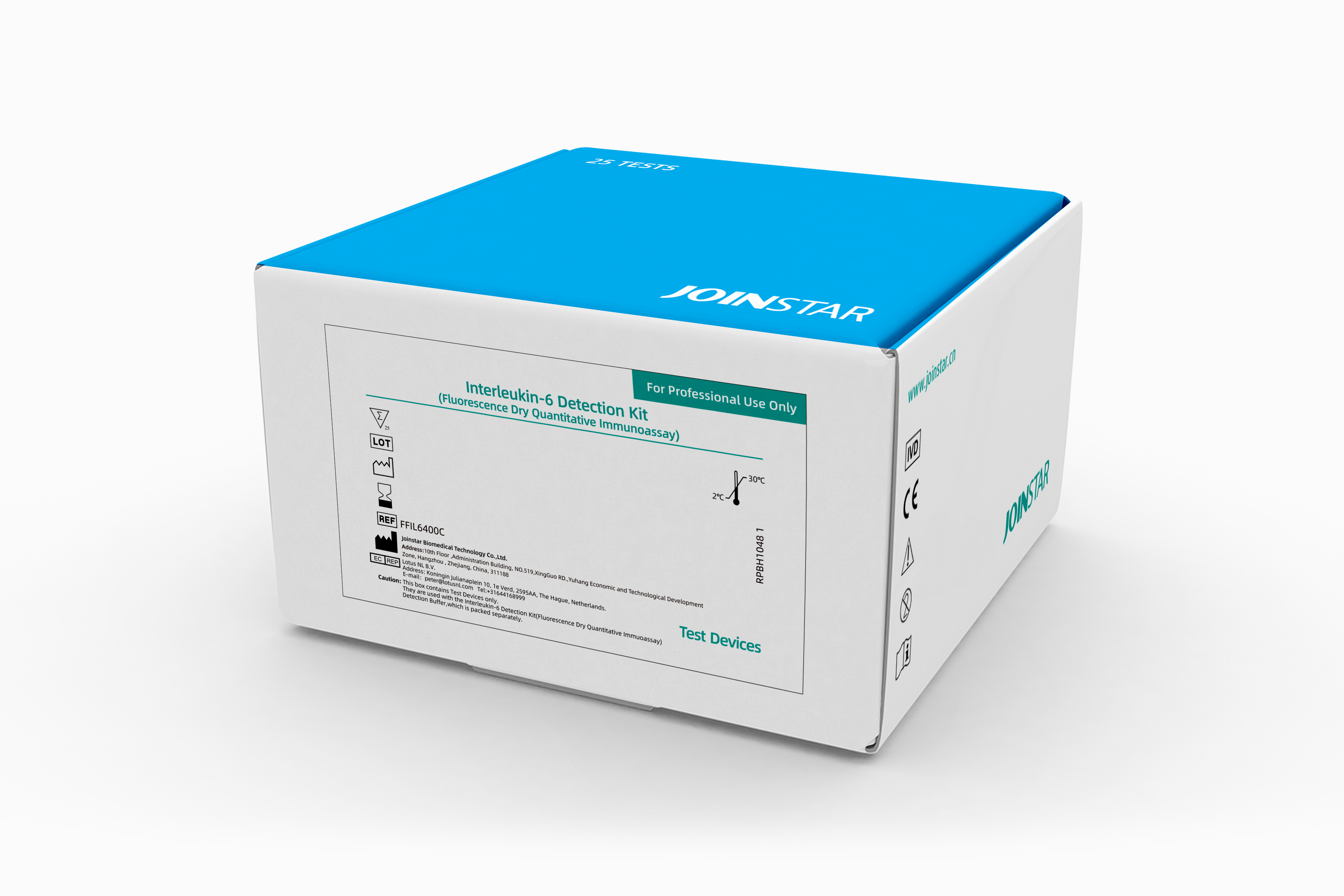
| Kit Name | Interleukin-6 Detection Kit |
| Method | Fluorescence dry quantitative immunoassay |
| Assay measuring range | 3.0 pg/mL~5000.0 pg/mL |
| Incubation time | 10 min |
| Sample | Human serum, Plasma (EDTA anticoagulant and Sodium citrate anticoagulant), Whole Blood (EDTA anticoagulant and Sodium citrate anticoagulant) |
| Reference range | ≤7.0 pg/mL |
| Storage and Stability: | Stable for up to 24 months (Store sealed at 2°C–30°C). |
Order Informaion
| Catalog No. | Product | Test/Kit |
| FFIL6400C | Interleukin-6 Detection Kit | 25 |

Introduction
Interleukin 6 (IL-6) is an inflammatory factor consisting of 184 amino acid residues with a relative molecular weight of 26 KDa.
IL-6 is mainly secreted by monocytes, macrophages, B cells, T cells, endothelial cells and fibroblasts, and exerts its biological effects by binding to its receptors.
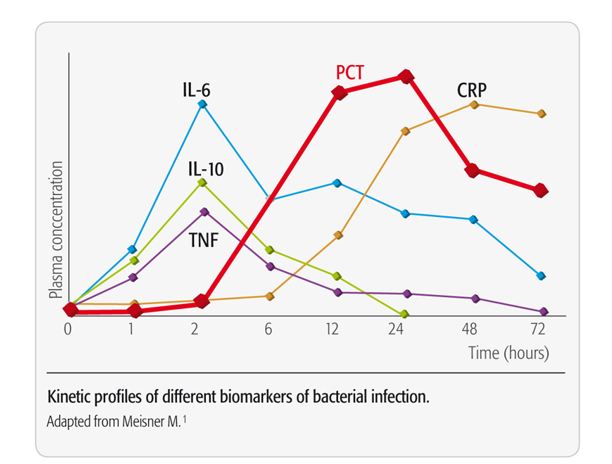
IL-6 rises rapidly after infection, peaking at 2h with a half-life of only 1h.
It stimulates the synthesis of CRP and SAA in hepatocytes and induces the production of PCT.
IL-6 can be used to aid in the management of critically ill patients as early indicator for acute inflammation.
The concentration of IL-6 is also significantly increased in autoimmune diseases, acute pancreatitis, cardiovascular diseases, tumors, burns, trauma, etc.


Clinical Applications


Early diagnosis of acute infection
IL-6 is central to the inflammatory cascade response and is elevated earlier and with greater sensitivity than CRP and PCT in the early stages of infection.
Severity of infection assessment
The elevated level of IL-6 corresponds to the severity of the infection, and it can be used to evaluate the severity of the infection.
Diagnosis of sepsis
The specificity of IL-6 is slightly lower than that of PCT, so the combined testing of multiple infection markers can complement each other and have higher diagnostic value.
Warning of sepsis
IL-6 is a marker for early warning of sepsis and its levels correlate significantly with APACHE II and SOFA scores.
Guidance on the use of antibiotics
The short half-life of IL-6 is very useful for insufficient PCT, which can provide a quicker indication of the effectiveness of antibiotic treatment in the early stages of infection.