






 Home
Home
 Products
Diabetes & Kidney injury
Neutrophil gelatinase-associated lipocalin (NGAL)
Products
Diabetes & Kidney injury
Neutrophil gelatinase-associated lipocalin (NGAL)
Neutrophil gelatinase-associated lipocalin (NGAL)
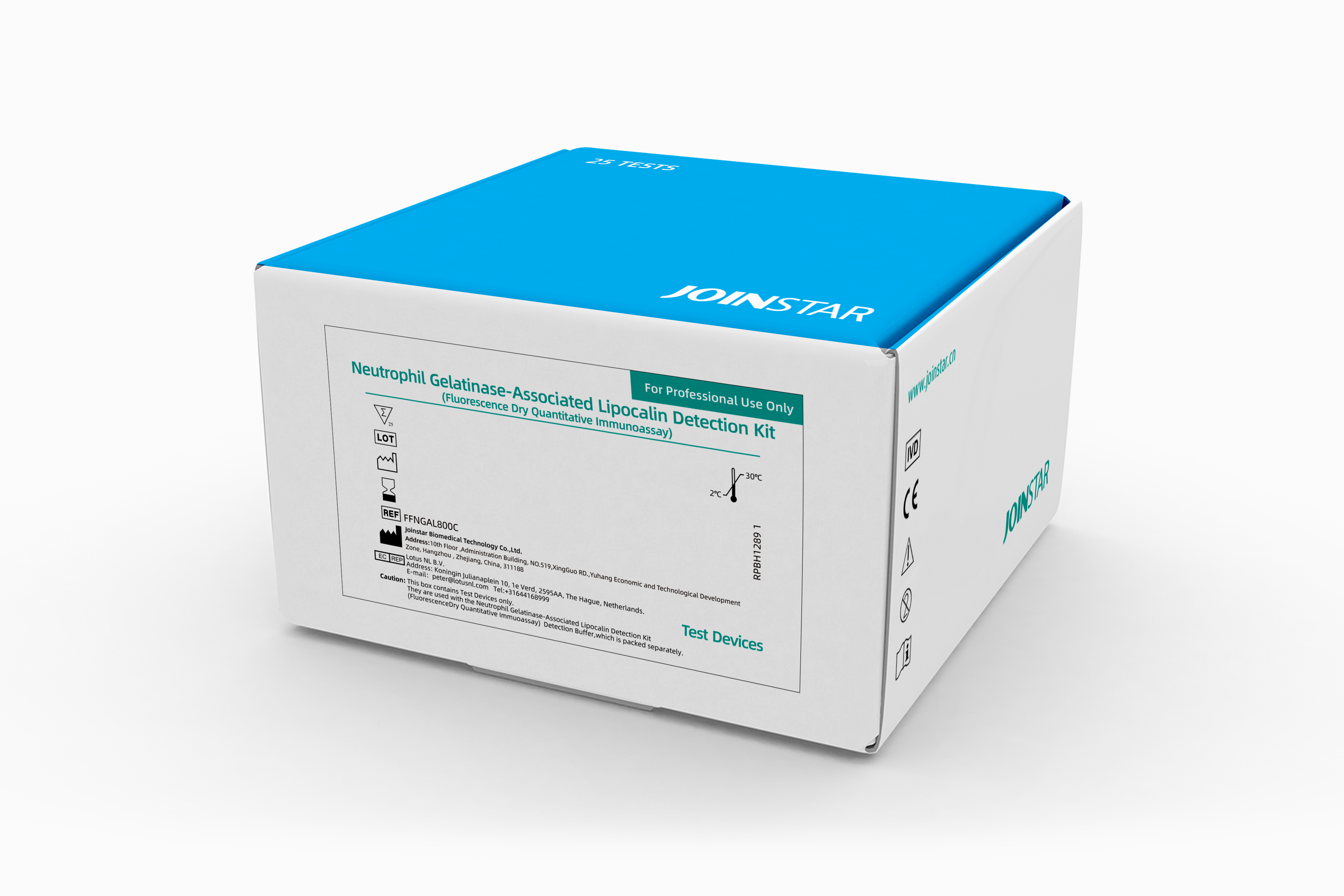
| Kit Name | Neutrophil Gelatinase-associated Lipocalin Detection Kit |
| Method | Fluorescence dry quantitative immunoassay |
| Assay Measuring Range | 50 ng/mL ~ 5000 ng/mL |
| Incubation Time | 15 min |
| Sample Type | Human serum, Plasma (EDTA), Whole Blood (EDTA), Urine |
| Reference Range | < 100 ng/mL |
| Storage and Stability |
Detection Buffer: Stable for up to 15 months (Store at 2°C–8°C in a sealed, dark environment). Reaction Plate: Stable for up to 15 months (Store sealed at 2°C–30°C). |
Order information
| Catalog No. | Product | Test/Kit |
| FFNGAL800C | Neutrophil Gelatinase-associated Lipocalin Detection Kit | 25 |

Introduction
Neutrophil gelatinase-associated lipocalin (NGAL) is a member of the lipid transport protein superfamily. It is a glycoprotein consisting of 178 amino acids and having a molecular weight of 25 kDa.
It is expressed in activated neutrophils and certain epithelial cells, including renal tubular epithelial cells.
Abnormal renal function causes damage to tubular epithelial cells, which secrete large amounts of NGAL. It is significantly elevated by different causes of kidney injury and is released into the urine and plasma.
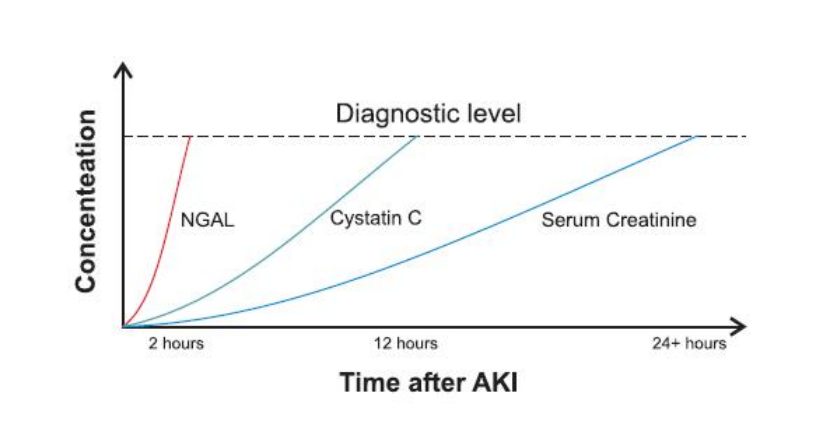
Normally, NGAL is maintained at a low level in urine and plasma, whereas it rises sharply within 2 hours after the onset of acute kidney injury (AKI). It is an excellent marker for the early diagnosis of AKI.
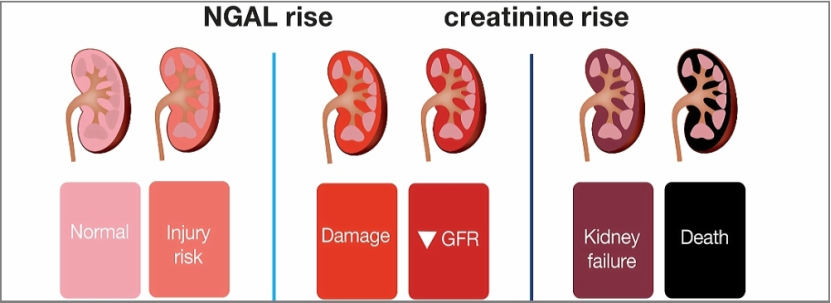
Elevation of NGAL occurs earlier than serum creatinine (SCr) after kidney injury.


Clinical Applications


Routine monitoring of critically ill patients
AKI has a prevalence of more than 50% in the ICU and a mortality rate of 50-80% in patients who are to be dialyzed. NGAL is capable of early diagnosis of AKI complications in critically ill patients.
Early diagnosis of AKI after organ transplantation
Routine testing after kidney transplantation allows early assessment of the need for dialysis and functional recovery of the transplanted kidney within 1 week after surgery.
Postoperative monitoring of coronary artery bypass grafting (CABG)
Earlier diagnosis of acute kidney injury in patients undergoing CABG can be achieved by measuring postoperative plasma NGAL concentration at 2 h.
Early diagnosis of contrast-induced nephropathy (CIN)
Urinary NGAL of CIN patients showed significant changes 24h after angiography, while levels of other markers such as serum creatinine (SCr) concentration do not change significantly at this time.
NGAL rises rapidly in response to kidney injury, preceding changes in creatinine by as much as 2 to 3 days.
Prediction of the risk of progression of chronic kidney disease (CKD)
The risk of CKD progression can increase by 3% and 2% for each 10 ng/mL increase in serum NGAL and urine NGAL concentrations, respectively.