






 Home
Home
 Products
Cardiovascular Disease (CVD)
Lipoprotein Associated Phospholipase A2 (Lp-PLA2)
Products
Cardiovascular Disease (CVD)
Lipoprotein Associated Phospholipase A2 (Lp-PLA2)
Lipoprotein Associated Phospholipase A2 (Lp-PLA2)
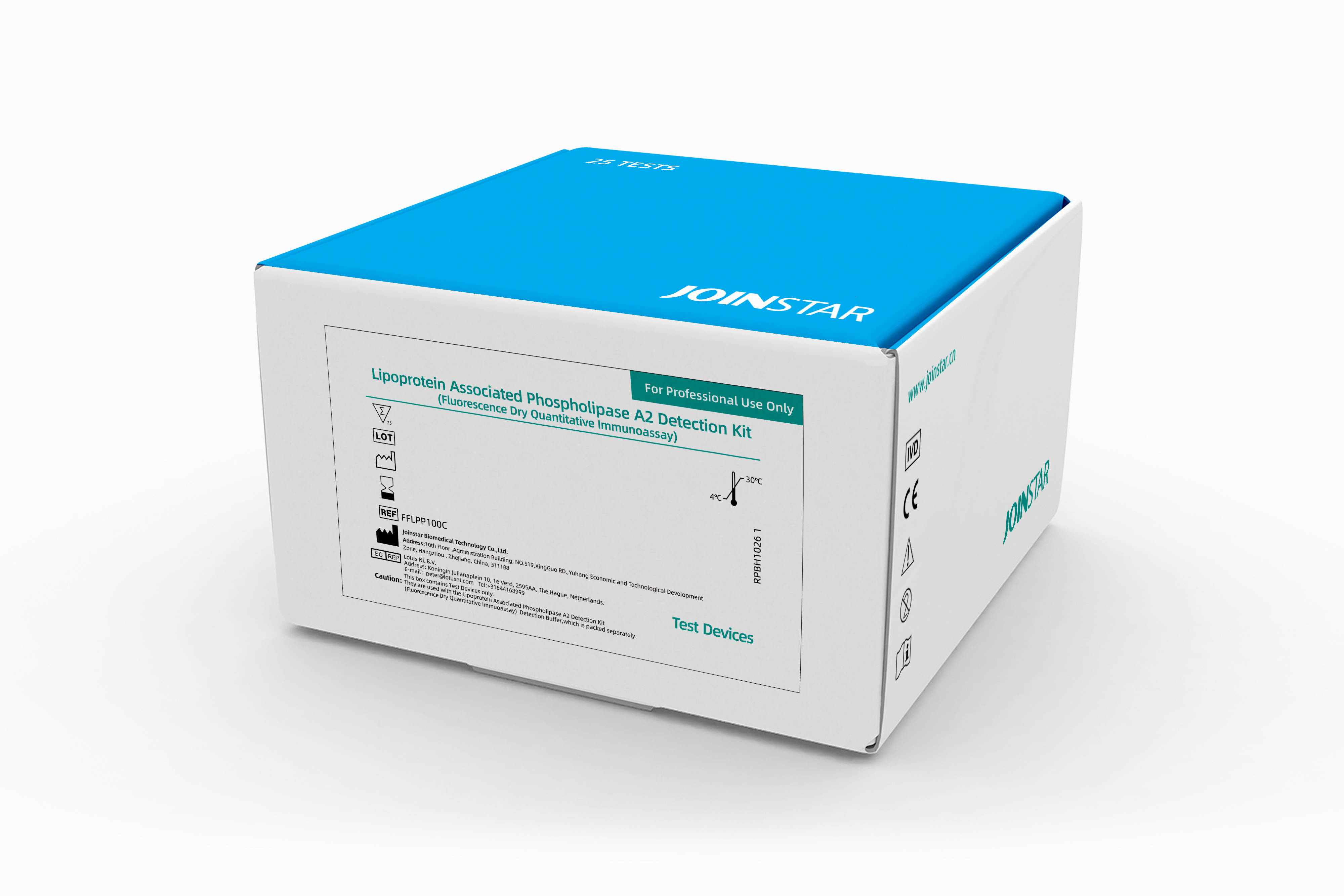
| Kit Name | Lipoprotein Associated Phospholipase A2 Detection Kit |
| Method | Fluorescence dry quantitative immunoassay |
| Assay Measuring Range | 5 ng/mL ~ 800 ng/mL |
| Incubation Time | 18 min |
| Sample Type | Human serum, Plasma (EDTA), Whole Blood (EDTA) |
| Reference Range | < 175 ng/mL |
| Storage and Stability |
Detection Buffer: Stable for up to 12 months (Store at 2°C–8°C in a sealed, dark environment). Reaction Plate: Stable for up to 12 months (Store sealed at 4°C–30°C). |
Order Information
| Catalog No. | Product | Test/Kit |
| FFLPP100C | Lipoprotein Associated Phospholipase A2 Detection Kit | 25 |

Introduction
•Lipoprotein associated phospholipase A2 (Lp-PLA2), also known as platelet-activating factor acetylhydrolase (PAF-AH), is composed of 441 amino acids and has a molecular weight of 45 kDa. It is produced by macrophages and is expressed in greater concentrations in atherosclerotic lesions.
•Lipids are fats in the blood. Lipoproteins are combinations of fats and proteins that carry the fats in the bloodstream. Lp-PLA2 in blood indicates the presence of fatty deposits in the arteries that are at risk of rupturing and causing heart disease or stroke.
•Lp-PLA2 is a novel and unique biomarker highly specific for vascular inflammation and atherosclerosis (AS). It is regulated by inflammatory mediators and has a strong pro-inflammatory and pro-atherosclerosis effect.
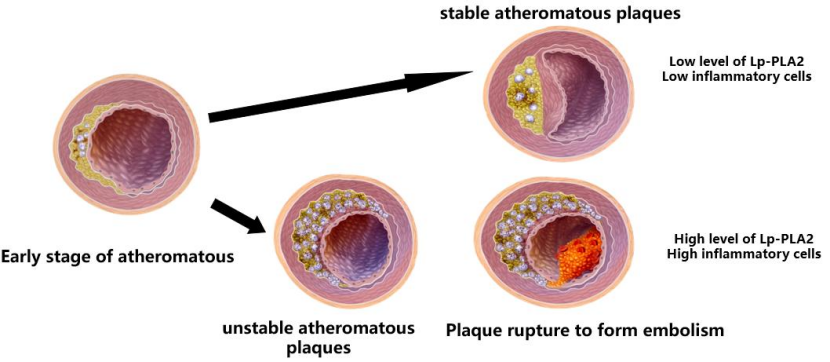
•It is released into the bloodstream in large quantities when the AS plaque has progressed to a severe level or is about to rupture. The test of Lp-PLA2 in blood can therefore reflect the degree of inflammation in AS.


Clinical Applications


Assessment of the inflammation of atherosclerosis and its stability
Lp-PLA2 accurately reflects the inflammatory level within atherosclerotic plaques and evaluates their vulnerability to rupture.
Prediction of coronary heart disease and ischemic stroke
As an independent vascular risk factor, it provides a prospective prediction of the likelihood of developing these two diseases.
Warning the occurrence of myocardial infarction and cerebral thrombosis
Abnormal elevations in this biomarker serve as an early warning signal for severe thrombotic events like acute myocardial infarction.
Assessment of recurrence risk of cardiovascular and cerebrovascular embolic diseases
Continuous monitoring of this indicator helps determine the potential risk of secondary cardiovascular and cerebrovascular events in patients.
Assess the effectivity of treatment in atherosclerosis-related diseases
By tracking concentration changes, it offers an objective, dynamic evaluation of the efficacy of clinical drug interventions.