






 Home
Home
 Products
Cardiovascular Disease (CVD)
Brain Natriuretic Peptide (BNP)
Products
Cardiovascular Disease (CVD)
Brain Natriuretic Peptide (BNP)
Brain Natriuretic Peptide (BNP)
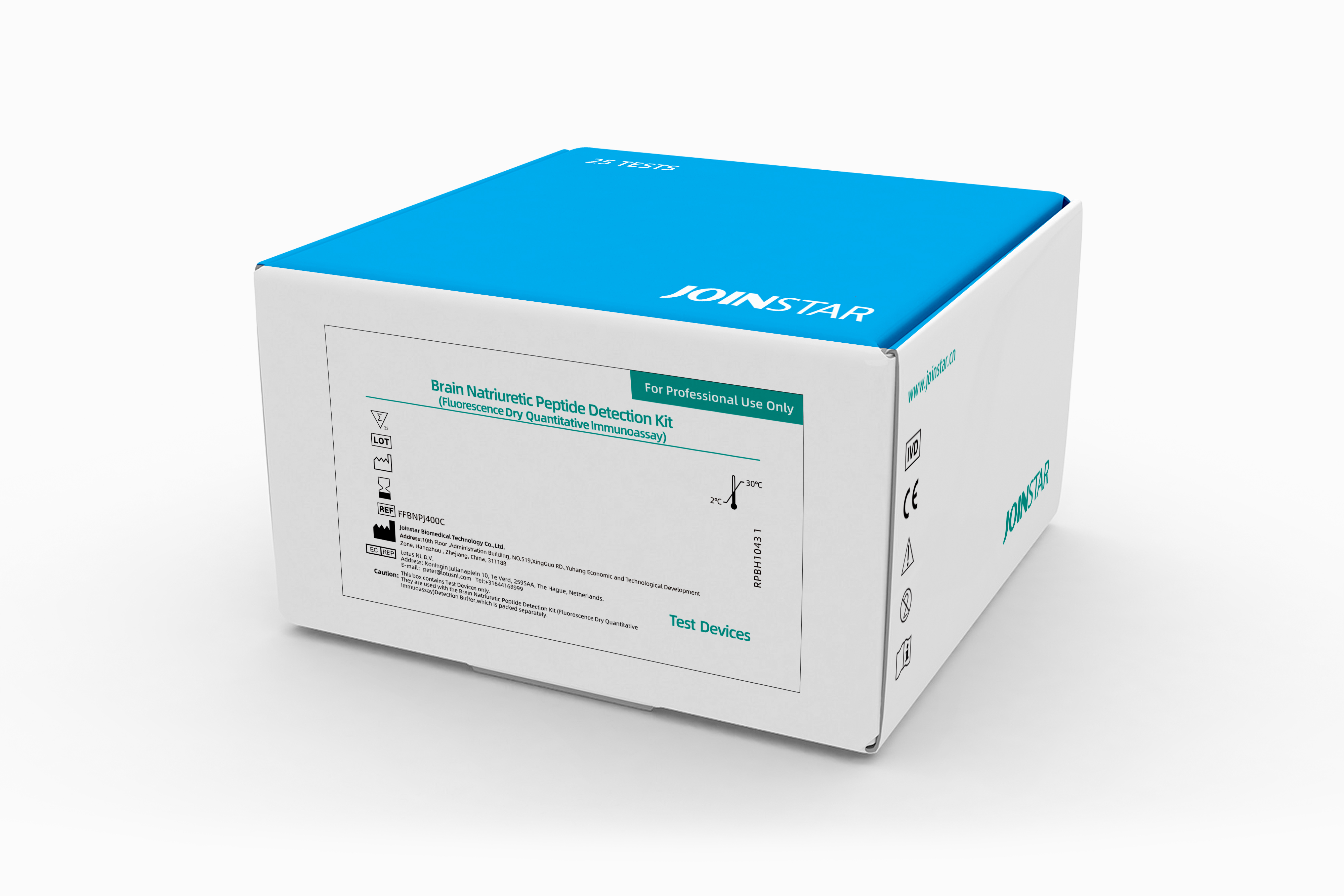
| Kit Name | Brain Natriuretic Peptide Detection Kit |
| Method | Fluorescence dry quantitative immunoassay |
| Assay Measuring Range | 5.0 pg/mL ~ 5000.0 pg/mL |
| Incubation Time | 10 min |
| Sample Type | Plasma (EDTA), Whole Blood (EDTA) |
| Reference Range | ≤ 100.0 pg/mL |
| Storage and Stability | 24 months at 2°C–30°C. |
Order Infomation
| Catalog No. | Product | Test/Kit |
| FFBNPJ400C | Brain Natriuretic Peptide Detection Kit | 25 |

Introduction
•BNP in human heart tissue is much more than that in brain tissue, and both atrium and ventricle can be secreted, but BNP is mainly synthesized and secreted in ventricular muscle. 60% of BNP in peripheral blood is secreted by the ventricle.
•BNP then acts on the kidneys causing fluid and sodium loss in the urine and mild vasodilation so releasing the pressure.
•In heart failure the heart cannot pump strongly enough for the body’s requirements, the heart walls are stretched, and fluid starts to accumulate causing back pressure and hence more BNP to be released.
•Assays for BNP and NT-proBNP have been increasingly used to establish the presence and severity of heart failure (HF).
Clinical Applications


Screening for heart failure
BNP serves as a highly sensitive biomarker for the early screening of heart failure, helping to identify asymptomatic or high-risk patients before severe symptoms appear.
Diagnosis of heart failure
It provides crucial, objective evidence for the accurate diagnosis of heart failure, establishing the presence of the condition especially when clinical signs are ambiguous.
Risk stratification for heart failure
BNP levels assist clinicians in the risk stratification for heart failure, effectively categorizing patients to prioritize intensive care for those at higher risk of adverse events.
Distinguish between cardiogenic and non-cardiogenic dyspnea
In emergency settings, BNP rapidly helps distinguish between cardiogenic and non-cardiogenic dyspnea, quickly differentiating heart-related breathing issues from pulmonary causes to ensure proper treatment.
Assessment of the severity and prognosis of heart failure
Continuous monitoring allows for a precise assessment of the severity and prognosis of heart failure, guiding treatment adjustments and evaluating long-term patient outcomes.