


 Home
Home
 Products
Cardiovascular Disease (CVD)
N-Terminal pro-Brain Natriuretic Peptide (NT-proBNP)
Products
Cardiovascular Disease (CVD)
N-Terminal pro-Brain Natriuretic Peptide (NT-proBNP)
N-Terminal pro-Brain Natriuretic Peptide (NT-proBNP)

| Kit Name | N-terminal pro-brain Natriuretic Peptide Detection Kit |
| Method | Fluorescence dry quantitative immunoassay |
| Assay Measuring Range | 30.0pg/mL ~ 35000.0pg/mL |
| Incubation Time | 12 min |
| Sample Type | Human serum, Plasma (EDTA), Whole Blood (EDTA) |
| Reference Range |
< 300 pg/mL (< 75 Years Old) <450.0 pg/mL (≥ 75 Years Old) |
| Storage and Stability |
Detection Buffer: Stable for up to 18 months (Store at 2°C–8°C in a sealed, dark environment). Reaction Plate: Stable for up to 18 months (Store sealed at 2°C–30°C). |
Order Information
| Catalog No. | Production | Test/Kit |
| FFNTB400C | N-terminal pro-brain Natriuretic Peptide Detection Kit | 25 |

Introduction
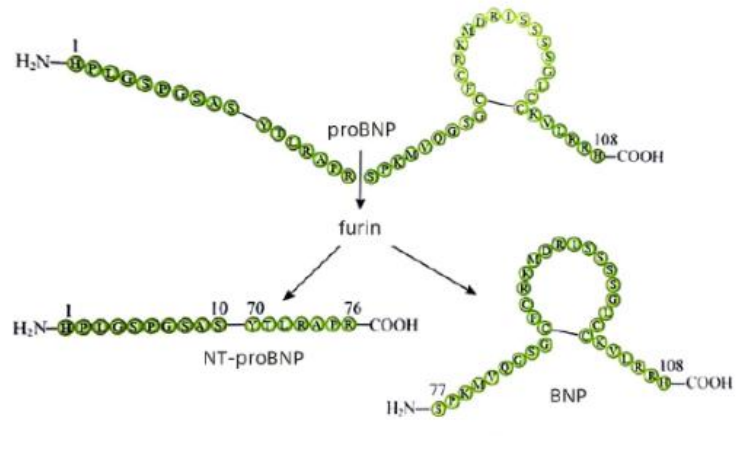
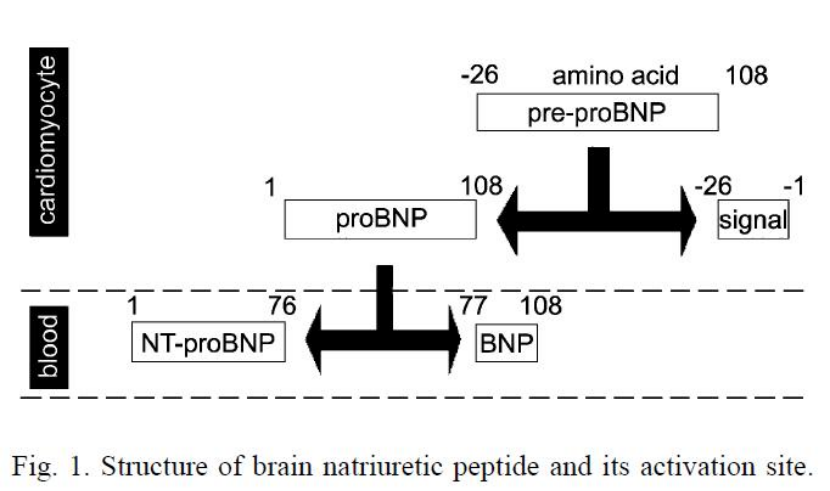
•N-terminal pro B-type natriuretic peptide (NT-proBNP) is an inactive peptide released along with the active peptide hormone BNP when the walls of the heart are stretched or there is pressure overload on the heart by fluid overload. •BNP then acts on the kidneys causing fluid and sodium loss in the urine and mild vasodilation so releasing the pressure. •In heart failure the heart cannot pump strongly enough for the body’s requirements, the heart walls are stretched, and fluid starts to accumulate causing back pressure and hence more BNP to be released. •NT-proBNP is released into the circulation in equal amounts to the active hormone but is significantly more stable and hence forms a good marker of BNP output. •Assays for BNP and NT-proBNP have been increasingly used to establish the presence and severity of heart failure (HF). •The level of NT-proBNP in patients with acute heart failure is significantly higher than that in patients with other causes of dyspnoea and is the independent predictor of heart failure in patients with acute dyspnoea. •NT-proBNP has good diagnostic and prognostic value for acute heart failure. It can improve the accuracy of diagnosis, reduce the time of diagnosis and help to determine the prognosis.


Clinical Applications