






 Home
Home
 Products
Cardiovascular Disease (CVD)
Growth STimulation expressed gene 2 (ST2)
Products
Cardiovascular Disease (CVD)
Growth STimulation expressed gene 2 (ST2)
Growth STimulation expressed gene 2 (ST2)
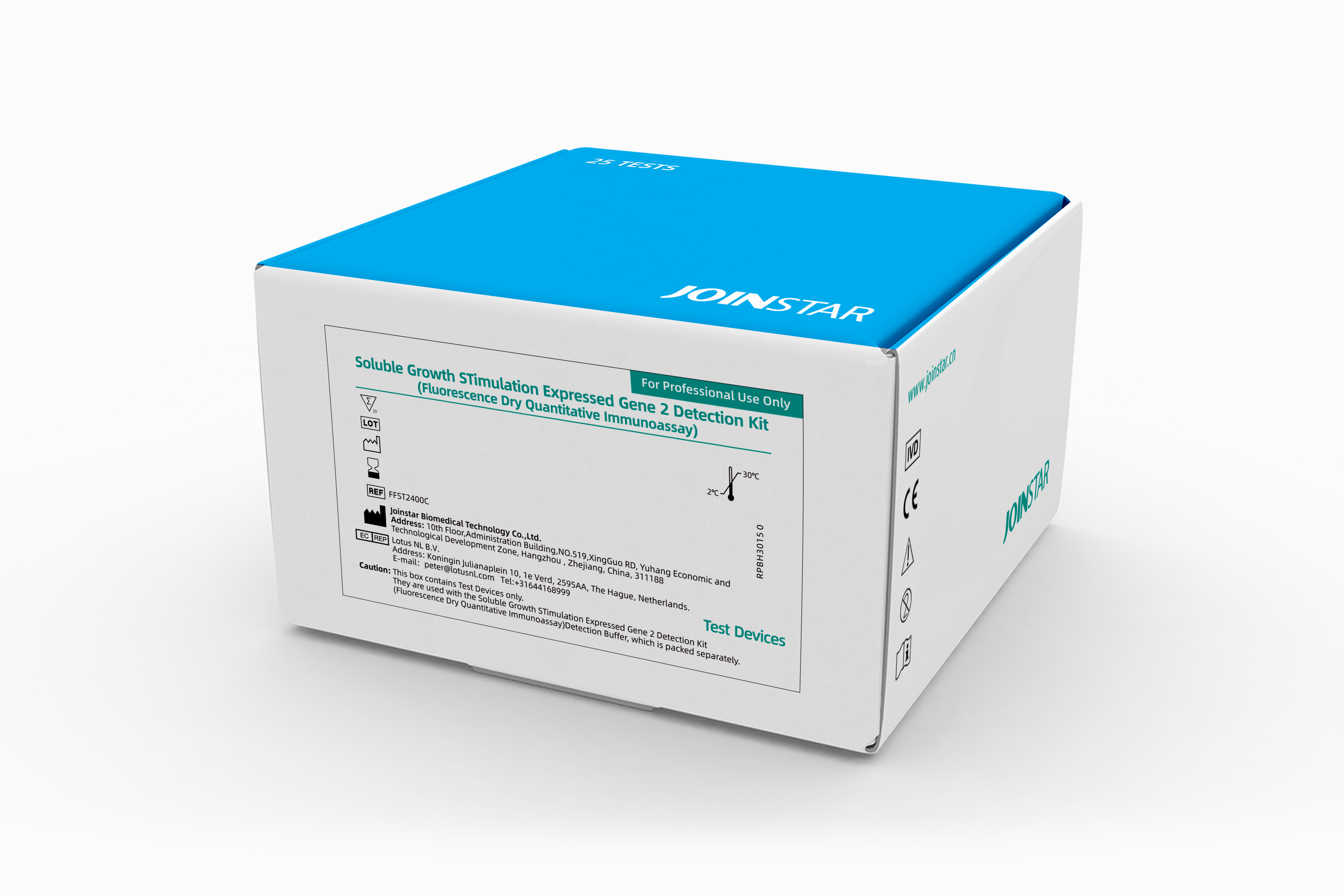
| Kit Name | Soluble Growth Stimulation Expressed Gene 2 Detection Kit |
| Method | Fluorescence dry quantitative immunoassay |
| Assay Measuring Range | 3.0ng/mL ~ 10000ng/mL |
| Incubation Time | 10 min |
| Sample Type | Human serum, Plasma (EDTA), Whole Blood (EDTA) |
| Reference Range | ≤ 35.0 ng/mL |
| Storage and Stability |
Detection Buffer: Stable for up to 24 months (Store at 2°C–8°C in a sealed, dark environment). Reaction Plate: Stable for up to 24 months (Store sealed at 2°C–30°C). |
Order Information
| Catalog No. | Product | Test/Kit |
| FFST2400C | Soluble Growth Stimulation Expressed Gene 2 Detection Kit | 25 |

Introduction
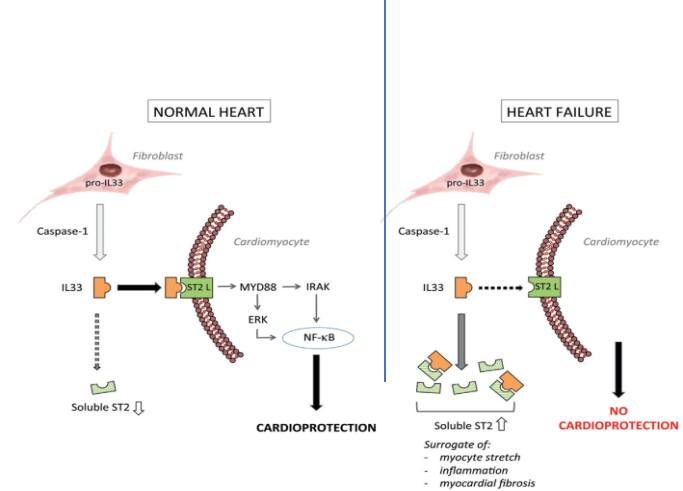
ST2 (Growth STimulation expressed gene 2) is a highly valuable, novel biomarker associated with cardiac stress and myocardial fibrosis.
• Unlike traditional biomarkers that primarily reflect acute injury or volume overload, ST2 specifically indicates pathological cardiac remodeling, providing unique insights into long-term cardiac health.
• Its levels are generally not significantly affected by confounding factors like age, BMI, or impaired renal function, making it an extremely reliable and independent predictor of adverse cardiovascular events.
• It is highly recommended to be tested in combination with natriuretic peptides (such as NT-proBNP or BNP) to offer a more comprehensive and highly accurate assessment of heart failure.


Clinical Applications


Risk stratification of heart failure
-
The 35 ng/mL Clinical Threshold: A baseline sST2 value of 35 ng/mL is widely recognized as the definitive prognostic cut-off.
-
Patients presenting with sST2 levels > 35 ng/mL face a substantially higher risk of incident heart failure, hospital readmission, and cardiovascular mortality.
-
Conversely, patients with sST2 levels ≤ 35 ng/mL generally exhibit better hemodynamic stability and a lower risk of short-term adverse events.
Prognosis evaluation of heart failure
-
Elevated sST2 levels provide incremental prognostic value beyond traditional natriuretic peptides (such as NT-proBNP or BNP).
-
Clinical data indicates that patients maintaining sST2 levels above the 35 ng/mL threshold have a markedly higher 1-year cardiovascular mortality rate.
-
Utilizing ST2 alongside natriuretic peptides allows clinicians to more accurately identify high-risk cohorts who require intensive monitoring.
Treatment guidance and therapeutic monitoring of heart failure
-
Therapeutic Response: A significant decline in sST2 concentrations during hospitalization or outpatient follow-up correlates directly with a favorable response to guideline-directed medical therapies (e.g., Beta-blockers, ACE inhibitors, MRAs).
-
Therapy Optimization: Patients whose sST2 levels fail to drop below 35 ng/mL during treatment are identified as non-responders who remain at high risk for re-hospitalization. This dynamic monitoring capability allows physicians to safely titrate medications or intensify therapeutic interventions before a severe clinical decompensation occurs.